

“We are able to neglect every little thing that we have discovered since go-karts” is how Esteban Ocon summed up the regulation overhaul for the 2026 System 1 marketing campaign.
He isn’t alone in considering that both, as a result of one of many main speaking factors forward of this forthcoming season is how drivers are having to considerably adapt their types to those utterly new vehicles; Oscar Piastri revealed there’s “fairly huge variations” than earlier than, whereas George Russell claimed “there’s a whole lot of studying available in the intervening time”.
One of many largest learnings is with the ability unit, which is now extra reliant on electrical vitality because it has a near-50:50 cut up with the inner combustion engine. Meaning battery harvesting goes to be a giant theme in any respect 24 grands prix, as at occasions drivers might want to protect their automobile’s vitality in an effort to go faster afterward – downshifting alongside a straight being an instance by which that would occur.
So slowing down to realize a greater lap time, in essence, leads to going towards what drivers may have been taught rising up, and reigning world champion Lando Norris believes “the most important problem on the minute is battery administration”.
However there have beforehand been security considerations which include it, significantly closing speeds. The clear instance is when a driver is harvesting vitality down a straight and the automobile behind is flat out, the speed at which they meet can be considerably faster than earlier than – as Mercedes boss Toto Wolff noticed through the first collective take a look at of 2026 in Barcelona.
“George handed [Franco] Colapinto while Colapinto was doing his lengthy runs,” he mentioned. “I believe it was like 60km/h or 50km/h straightline velocity distinction.”
George Russell, Mercedes
Picture by: Mercedes AMG
Wolff due to this fact reckons it’s going to vary the fashion of racing, particularly with these new vehicles additionally being 32kg lighter – the regulated minimal weight has decreased from 800kg to 768kg – and having much less downforce than the ground-effect period.
“We’re going to see rather more overtaking,” the Austrian added. “We will see it in areas that we would not anticipate. So, aside from the actual fact of the quickest vehicles with the perfect drivers, it is also going to have this extra dimension of clever driving and ways which can be going to be straightforward to grasp, for my part, for System 1.”
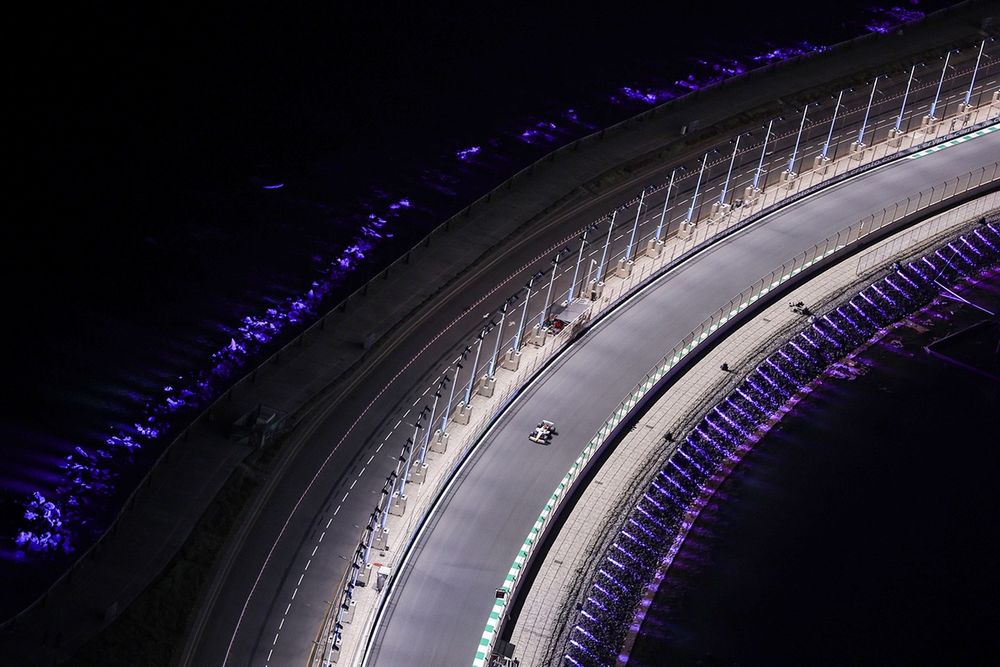
Regardless of his optimism, the faster closing speeds and new alternatives to overhaul doubtlessly pose a threat at tracks like Jeddah the place there are a number of blind corners. That is one thing Russell raised two years in the past when he mentioned “having a crash at 360-370km/h goes to be fairly loopy”.
“It should have so little downforce within the straights,” the Mercedes driver added on the time. “It is virtually going to really feel such as you’re simply flying by way of the air. You possibly can think about in a race that it begins raining and also you’re on slick tyres, and also you’re doing 250mph on a avenue circuit. That is going to be a little bit of a sketchy place to be, so these are questions that must be answered.”
These considerations for moist races stay, however the different points have pale for the 2026 championship favorite: “There are going to be some examples of main closing speeds, I do not assume that’ll be an issue in dry situations.
“It could be an issue in low-visibility races. Nonetheless, if there’s low visibility, that clearly means it is moist and for those who’re driving within the moist, since you’re going across the corners a lot slower and the braking distances are longer, you are re-harvesting rather more and also you’re spending a lot much less vitality.
Isack Hadjar, Racing Bulls
Picture by: Pink Bull Content material Pool
“Over the course of a lap, you may have rather more to spend and there will be much less of those main de-rates. So in moist situations, there must be loads of vitality to spend throughout the lap and also you should not have these main closing speeds.”
Within the situation the 27-year-old is referring to, he’s saying that each one drivers ought to have adequate electrical energy as a result of earlier braking and decrease cornering speeds which include moist contests. So, drivers don’t want to reap in sure elements, due to this fact mitigating the big velocity variations. These ideas have been echoed by McLaren’s Piastri when he mirrored on his Barcelona shakedown.
“I obtained near a few vehicles, and I made one overtake, which was a fairly large velocity distinction, however I believe that particular person was simply being good and letting me cross,” he mentioned. “So I believe the velocity variations can be perhaps somewhat bit greater than what we had with DRS, however I do not assume there’s going to be any harmful situations of vehicles doing wildly completely different speeds.”
Overcoming such a possible downside has come on account of groups cooperating with governing physique the FIA. “With such a giant distinction in energy, when you do not have the battery deploying at full energy, it is 350 kilowatts – it is a whole lot of horsepower distinction, so we sort of want some indication,” added Piastri. “So we have labored fairly intently with the FIA throughout all of the groups in making an attempt to make it as secure and as apparent as attainable when issues are occurring that we’d not anticipate.”
Further reporting by Filip Cleeren and Stuart Codling
We wish your opinion!
What would you wish to see on Motorsport.com?
Take our 5 minute survey.
– The Motorsport.com Workforce
