

What had been anticipated for a while was formally confirmed in the course of the race weekend in Shanghai: because of the ongoing unrest within the Center East, the races in Bahrain and Saudi Arabia have been cancelled.
Logically, this has monetary penalties and logistical implications for the groups, notably as a part of the groups’ freight and paddock gear remains to be in Bahrain after winter testing. However past the logistical affect, it additionally impacts a number of sporting elements.
Extra time, but in addition extra prices? The impact on improve plans
Oscar Piastri, McLaren
Photograph by: James Sutton / Formulation 1 / Formulation Motorsport Ltd by way of Getty Photographs
To begin with, the modified schedule impacts the improve plans of a number of groups. That’s all the time the case when the calendar is adjusted, however this yr much more so than standard. Below the brand new laws this season will probably be an enormous growth race, with groups needing to plan their upgrades rigorously.
Two components make this notably advanced and clarify why groups have totally different plans. Some outfits already had new elements within the pipeline for the early fly-away races, whereas others needed to attend for the primary few race weekends to realize a clearer image—particularly as a result of the most important positive factors in the mean time lie in understanding the facility unit and optimising vitality administration.
“I feel we have in all probability not even spoken in regards to the automotive that a lot, as a result of we’re so centered on learn how to get essentially the most out of the facility unit,” Oscar Piastri stated in China.
Apart from the sturdy deal with the facility unit, groups should additionally rigorously plan their upgrades due to the finances cap. Alpine’s managing director Steve Nielsen defined that the journey prices of introducing new elements are actually an necessary a part of the equation.
“It is the entire thing, even all the way down to how costly it’s to ship the elements as a result of that is all within the cap. 5 years in the past, you did not take a look at that, however these cardboard packing containers that all of us journey over within the morning while you come into the paddock, they price cash to get right here, and loads. That is all a part of your spend. You rapidly burn by your cash if you happen to neglect that stuff.”
It means groups should strike a steadiness between bringing efficiency positive factors to the observe as rapidly as potential and conserving the prices of recent elements as little as potential.
“It is a steadiness. If it is 20 factors of downforce, in fact you are going to fly it. If it is minor, you are not,” Nielsen added.
The cancellation of Bahrain is especially related in that regard. Its location within the Center East made it a horny place for a number of groups to introduce upgrades after three distant fly-away races. On high of that, groups have already got information from Bahrain due to winter testing. That comparative information might have been helpful to guage the impact of recent elements, that means they’d not must rely totally on the digital world.
That possibility has now disappeared.
The updates that had been deliberate for the Center Jap races should be pushed again to one of many following occasions on the American continent: in Miami or Montreal. One silver lining, nevertheless, is that it offers groups extra time behind the scenes, and in keeping with a number of crew principals that further time is one thing all outfits can use below F1’s new ruleset.
ADUO system – when can Honda get further upgrades?
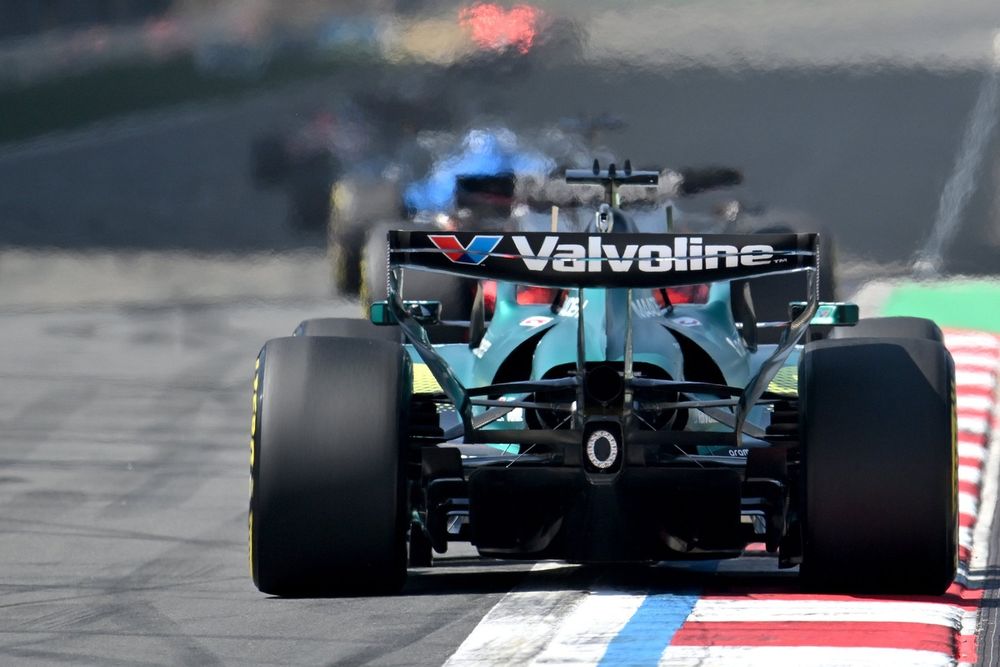
Lance Stroll, Aston Martin Racing
Photograph by: Sam Bagnall / Sutton Photographs by way of Getty Photographs
A second issue considerations the protection internet that has been included within the technical laws for this yr, extra particularly for the interior combustion engine. The system for Further Growth and Improve Alternatives (ADUO) offers producers which are behind the possibility to develop their ICE greater than the remainder of the pack.
The unique thought was that the pure energy of the interior combustion engine can be measured after each six races. Producers which are between 2% and 4% behind the strongest combustion engine within the area obtain one further improve alternative from the FIA. These which are greater than 4% down in comparison with the very best ICE obtain two further upgrades.
Honda seemingly falls into the latter class — one thing Adrian Newey has already hinted at by saying the Japanese producer must make a significant step with its ICE energy — though the cancellation of two races raises the query of when precisely that chance will come up.
In principle, the FIA has a number of choices, with discussions behind the scenes nonetheless ongoing. If it retains the six-race cycle strictly intact, it will imply that the primary improve alternative strikes from after the Miami Grand Prix (initially race 6) to the Monaco Grand Prix. Nevertheless, there are some concepts on the desk to maintain the primary event across the first US race of the season.
When requested by Motorsport.com, the FIA stated that potential options are presently below assessment. One possibility can be to divide the brand new calendar consisting of twenty-two races as evenly as potential into 4 segments, probably by implementing calendar dates as a substitute of particular races. A second possibility is to take care of the six-race cycle and easily shorten the primary one.
In that regard, the FIA desires to debate the proposals with all stakeholders, making the break between China and Japan a logical second to finalise the choice on this entrance as nicely.
Compression ratio – fewer races forward of the additional check
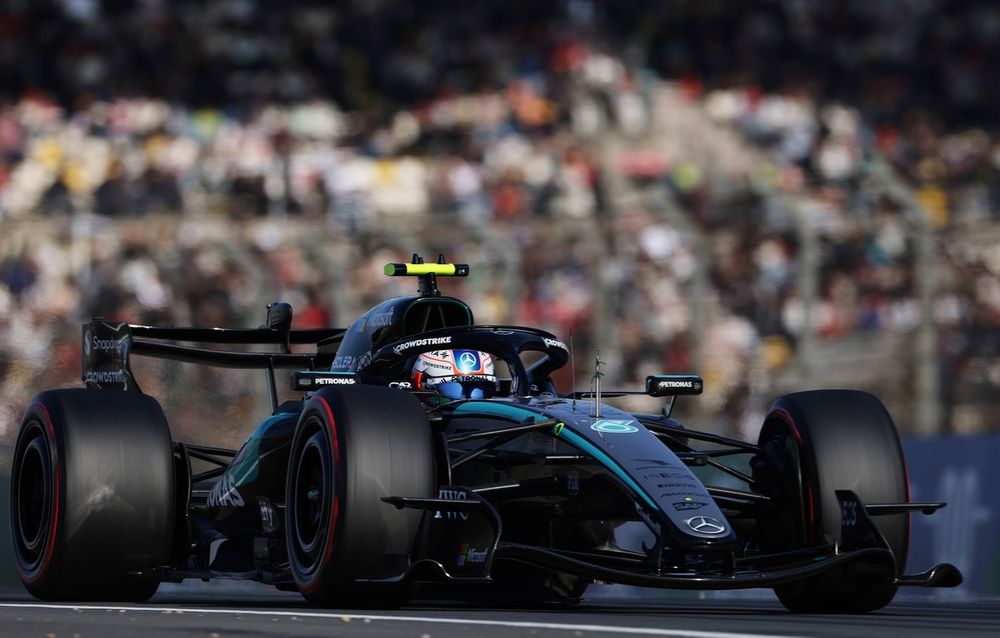
Andrea Kimi Antonelli, Mercedes
Photograph by: Mark Thompson / Getty Photographs
The ultimate issue pertains to the subject that has dominated the build-up to the 2026 F1 season: the compression ratio. The problem grew to become political when Mercedes’ opponents caught wind that Toto Wolff’s crew was in a position to adjust to the 16:1 restrict throughout static checks at ambient temperature, however might obtain a better ratio when operating.
In the long run, the FIA discovered a center floor by including a further compression ratio check from 1 June onwards at an engine temperature of 130 levels Celsius. It’s a traditional F1 compromise. For Mercedes’ rivals there was one thing to realize from it, because the preliminary plan had been 1 August and the introduction was then introduced ahead. The truth that the proposal was authorized unanimously confirms, nevertheless, that Mercedes might additionally dwell with it. That’s as a result of the retention of the chilly check — alongside the new one — was essential for Mercedes.
The cancellation of the races within the Center East means there’ll now solely be 5 race weekends earlier than the change as a substitute of seven, together with the occasions in Australia and China. It means Mercedes could have fewer alternatives to doubtlessly profit from the upper ratio than initially anticipated, though the image is extra nuanced than typically described. It has simply been assumed that Mercedes can attain 18:1 on observe, however in actuality the determine is way extra restricted than that. The lap time acquire subsequently doesn’t come near the estimates made in some stories.
Based mostly on the primary races, the energy of the producer with the three-pointed star is rather more layered than the compression ratio alone, with the effectivity in deployment, the chassis, and the aero platform all taking part in a major function. Within the paddock it’s even recommended that Mercedes might not have to homologate the engine once more, which if the image would not change within the upcoming months, would point out that no main {hardware} adjustments are required – and that might be consistent with Wolff calling it “a storm in a teacup”.
The aggressive image might subsequently not change dramatically, though Mercedes – identical to all its opponents – will in essence have two race weekends fewer earlier than having to adjust to the brand new compression ratio check than initially anticipated.
We wish your opinion!
What would you prefer to see on Motorsport.com?
Take our 5 minute survey.
– The Motorsport.com Crew
